Summary
Python is the most popular programming language for data science and machine learning, thanks to its simplicity, versatility, and strong ecosystem of libraries. For beginners in the U.S., learning Python can unlock opportunities in tech, AI, and analytics. This guide walks through practical steps, resources, and tools to help complete novices build a strong foundation and start applying Python effectively.
Introduction: Why Python for Data Science and Machine Learning?
Python dominates data science and machine learning because of its easy-to-learn syntax and powerful libraries like NumPy, Pandas, TensorFlow, and Scikit-learn. For U.S. students, career changers, or professionals, Python is often the first step into high-paying fields like AI engineering and data analytics.
Example:
A college student with no coding background started learning Python on free platforms like Kaggle and Coursera, and within a year, they landed a data analyst internship using skills in Pandas and Matplotlib.
This article breaks down the process into beginner-friendly, practical steps that anyone can follow.
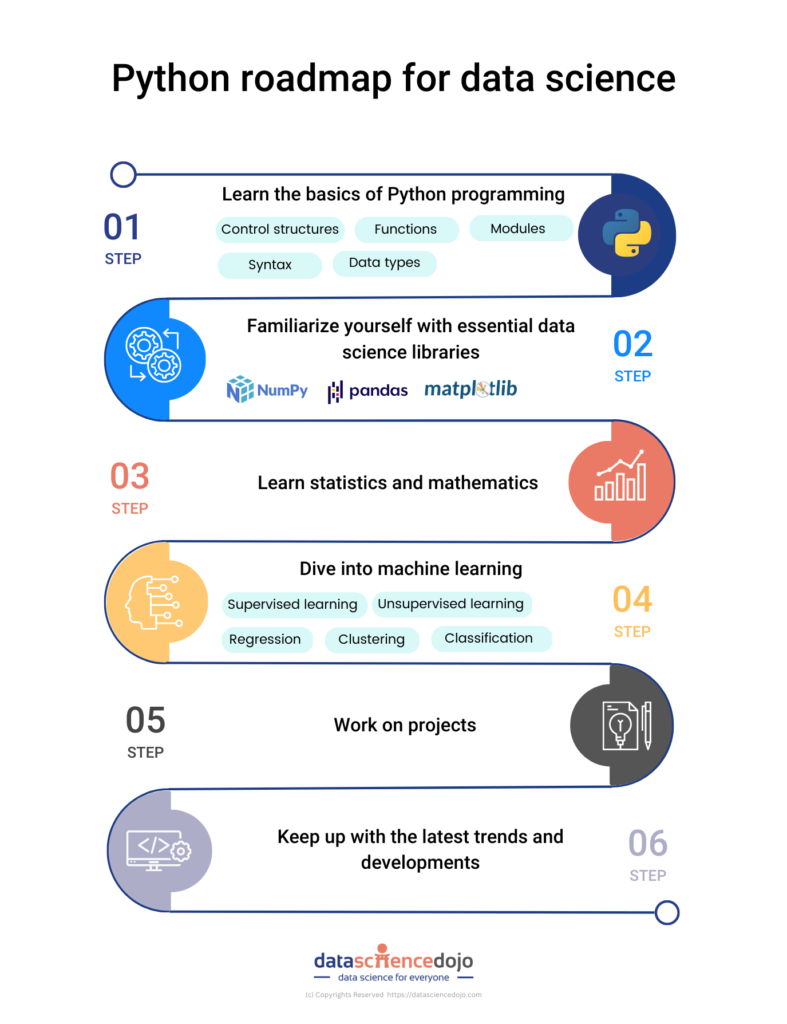
Step 1: Understand the Basics of Python Programming
Before diving into data science, beginners should focus on Python fundamentals. These include variables, data types, loops, functions, and object-oriented programming.
Recommended Free Resources:
- Python.org tutorials
- W3Schools Python basics
- YouTube channels like Corey Schafer and Programming with Mosh
Practical Example:
Write a simple Python script that calculates the average of three numbers. This basic coding exercise strengthens logic before tackling complex datasets.

Step 2: Learn Data Handling with Pandas and NumPy
Data science is about manipulating and analyzing data efficiently. Libraries like NumPy (for numerical operations) and Pandas (for dataframes) are essential.
- NumPy helps with arrays, linear algebra, and mathematical operations
- Pandas allows filtering, grouping, and merging large datasets
Example:
Load a CSV file with Pandas and calculate the average sales of a product category. This simulates real-world tasks done by analysts in U.S. companies.
Step 3: Visualize Data with Matplotlib and Seaborn
Data visualization is critical for communication. Python offers Matplotlib and Seaborn for charts and graphs.
Example:
A beginner can use Seaborn to plot a bar chart of customer purchases across U.S. states, turning raw data into actionable insights.
Step 4: Introduction to Machine Learning with Scikit-learn
Machine learning starts with understanding algorithms such as regression, classification, and clustering. Scikit-learn offers beginner-friendly models with simple syntax.
Practical Example:
Train a linear regression model to predict house prices based on square footage and location using Scikit-learn.
Step 5: Explore Deep Learning Basics with TensorFlow or PyTorch
Once comfortable with ML basics, explore deep learning using TensorFlow or PyTorch. Beginners can experiment with neural networks for image recognition or text analysis.
Example:
Build a basic image classifier to identify handwritten digits using the MNIST dataset, a classic machine learning project.
Step 6: Practice with Real Datasets
Hands-on experience is key. Free platforms like Kaggle, Google Colab, and UCI Machine Learning Repository provide datasets to practice on.
Example:
Download the Titanic dataset on Kaggle and try predicting survival using logistic regression—a classic beginner project.
Step 7: Work on Projects and Build a Portfolio
Employers value practical applications. Beginners should build projects like sentiment analysis, stock market prediction, or recommendation systems.
Example:
A beginner created a U.S. movie recommendation system using collaborative filtering, which later helped them land an entry-level data science role.
Step 8: Join Online Communities and Stay Updated
Engaging with communities accelerates learning. Platforms like Reddit r/datascience, Stack Overflow, and LinkedIn groups offer discussions and guidance.
Tip:
Participate in Kaggle competitions to improve problem-solving skills while connecting with other learners.
FAQs: Python for Data Science & ML Beginners
1. Is Python hard to learn for complete beginners?
No. Python is widely considered the easiest programming language to learn because of its readable syntax. Unlike languages like Java or C++, it doesn’t require complex boilerplate code. Beginners can start writing functional programs quickly, making it ideal for transitioning into data science and machine learning without a steep learning curve.
2. How long does it take to learn Python for data science?
For complete beginners, learning Python basics takes 2–3 months with consistent practice. Mastering data science libraries like Pandas, NumPy, and Scikit-learn may take another 6–9 months. Full-time learners may be job-ready in under a year, while part-time learners may take longer depending on their practice and project involvement.
3. Do I need a math background to start machine learning with Python?
A strong math background isn’t required to start, but basic knowledge of statistics, linear algebra, and probability helps. Many libraries abstract complex math, allowing beginners to focus on application first. As you progress, gradually learning the math behind algorithms enhances your understanding and model-building skills.
4. What are the best free resources to start learning Python for data science?
Top free resources include Kaggle’s free Python courses, Google’s Python Class, and W3Schools tutorials. YouTube educators like Corey Schafer offer clear explanations for coding fundamentals. Beginners can also practice on Jupyter Notebook via Google Colab without needing to install software locally.
5. Should I learn Python before diving into data science?
Yes. Python fundamentals are essential before tackling data science. Without understanding variables, loops, and functions, handling data and applying algorithms becomes overwhelming. Starting with Python basics ensures you can read, debug, and adapt code effectively when working with real-world datasets in machine learning projects.
6. Can I get a job with just Python and data science basics?
Entry-level jobs like data analyst or junior ML engineer may be possible if you build projects and showcase them in a portfolio. However, most roles require additional skills like SQL, data visualization, and cloud tools. Continuous learning and hands-on experience improve employability in U.S. markets.
7. Is Python better than R for beginners in data science?
Yes, for most beginners. Python has a larger community, broader application in machine learning, and an easier learning curve than R. While R excels in statistics and academic research, Python is more versatile, making it the preferred choice for data science roles in the U.S. industry.
8. What hardware do I need to practice Python for ML?
Beginners can start on any modern laptop with at least 8GB RAM. For larger ML projects, using Google Colab or Kaggle provides free cloud-based GPU access. High-end hardware isn’t necessary in the early stages, making Python learning accessible to most students and professionals in the U.S.
9. How important are projects in learning Python for data science?
Projects are critical. Employers care more about demonstrated skills than theory. Completing projects like customer churn prediction, text sentiment analysis, or housing price forecasting proves practical knowledge. A portfolio with GitHub links increases credibility and improves job opportunities in U.S. data science roles.
10. Can I learn Python for ML on my own without a degree?
Absolutely. Many successful data scientists are self-taught. With free resources, MOOCs, and project-based learning, a degree is not mandatory. What matters is consistent practice, problem-solving skills, and building a portfolio that showcases your capabilities in applying Python to real-world data science and machine learning tasks.
Practical Takeaways
- Start with Python basics before learning libraries
- Use Kaggle and Colab for hands-on practice
- Build projects to strengthen your portfolio
- Join online communities to accelerate progress
- Combine theory with consistent coding exercises
Read this also : https://lightsalmon-butterfly-388873.hostingersite.com/how-to-choose-the-best-laptop-for-college-in-the-us-without-overpaying/