How To Build a Strong Brand Identity for Your Business: The Ultimate Guide
In a world saturated with choices, why do customers choose one business over another? Often, it’s not about having the best product or the lowest price. It’s about connection. It’s about a feeling. That feeling is the result of a powerful, intentional force: a strong brand identity.
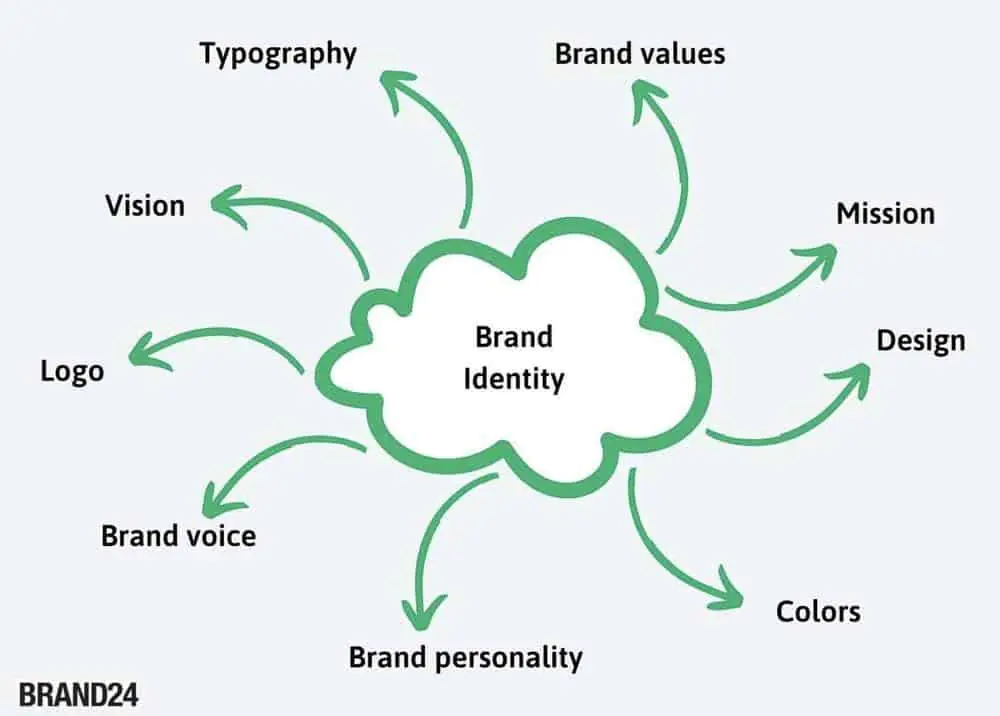
Think of brand identity as the personality of your business and the promise you make to your customers. It’s the sum of all the ways your company is perceived—from your logo and website to your customer service tone and social media presence. A haphazard identity confuses the market. A strong one builds trust, commands premium prices, and turns customers into loyal advocates.
This definitive guide will walk you through the exact process of constructing a bulletproof brand identity from the ground up. We’ll move beyond theory into actionable strategy, supported by real-world examples and data-driven insights, to ensure your brand doesn’t just exist—it thrives.
Part 1: The Unshakeable Foundation: Laying the Groundwork
Before you choose a single color or sketch a logo, you must build the foundation. This internal discovery phase is the bedrock upon which everything else rests. Skipping it is like building a mansion on sand; it might look good initially, but it will inevitably collapse.
What is the Core Purpose of a Brand Identity?
A brand identity serves multiple critical functions:
- Differentiation: In a crowded marketplace, it sets you apart. Warby Parker disrupted the eyewear industry not just with direct-to-consumer prices but with a brand built on style, social consciousness (“Buy a Pair, Give a Pair”), and a quirky, intellectual aesthetic that stood in stark contrast to legacy retailers.
- Recognition: A consistent visual and verbal identity makes your brand instantly recognizable. Think of Tiffany & Co.’s distinctive robin’s egg blue. That color alone evokes luxury, heritage, and desire.
- Connection: It forges an emotional bond with your audience. Nike’s “Just Do It” slogan isn’t about shoes; it’s about empowerment, achievement, and human potential. This emotional resonance is what creates lifelong fans.
- Trust and Loyalty: Consistency breeds trust. When customers know what to expect from every interaction with your brand, they feel secure. This reliability is the catalyst for loyalty.
Conducting a Deep Dive: Your Brand Discovery
Start by asking the hard, fundamental questions. Your answers will become your brand’s compass.
1. What is Your Mission, Vision, and Core Values?
Your mission is your what—what you do every day. Your vision is your why—the change you want to create in the world. Your values are your how—the principles that guide your actions.
- Example: Patagonia’s mission is “We’re in business to save our home planet.” This isn’t a tagline; it’s the core of their identity, influencing everything from product design (using recycled materials) to marketing (their “Don’t Buy This Jacket” campaign).
2. Who is Your Target Audience?
You cannot be everything to everyone. Define your ideal customer with precision. Go beyond basic demographics and build a detailed buyer persona.
- Consider:
- Demographics: Age, location, income, education.
- Psychographics: Interests, values, lifestyle, aspirations.
- Pain Points: What problems are they trying to solve?
- Buying Behavior: Where do they get information? What influences their decisions?
3. What is Your Unique Value Proposition (UVP)?
Your UVP is a clear statement that describes the unique benefit you offer, how you solve your customer’s needs, and what distinguishes you from the competition.
- Formula: “We help [Target Audience] achieve [Desired Outcome] by providing [Your Unique Solution] unlike [Competitors].”
- Example: Slack’s UVP revolves around making work life simpler, more pleasant, and more productive by replacing email with a streamlined channel-based messaging platform. They don’t just sell software; they sell organized communication.
4. Conduct a SWOT and Competitive Analysis
Understand your landscape. A SWOT (Strengths, Weaknesses, Opportunities, Threats) analysis provides internal clarity. A competitive analysis reveals where others in your space are succeeding and, crucially, where there are gaps you can fill with your unique brand.
Part 2: The Tangible Expression: Crafting Your Visual Identity
With your foundation solidified, it’s time to give your brand a face and a voice. This is where your identity becomes visible to the world. Consistency is your most powerful tool here.
How Do You Design a Memorable Logo and Visual System?
Your logo is the flag of your brand. It should be simple, memorable, timeless, versatile, and appropriate. Consider the different types: wordmarks (Google), pictorial marks (Apple), abstract marks (Nike), or combination marks (Burger King).
The Critical Elements of a Visual System:
- Color Palette: Colors evoke specific emotions and associations. According to a 2021 study in the Journal of the Academy of Marketing Science, color can improve brand recognition by up to 80%.
- Blue: Trust, security, stability (Facebook, IBM)
- Red: Energy, excitement, passion (Netflix, Coca-Cola)
- Green: Growth, health, sustainability (Whole Foods, Spotify)
- Choose a primary palette (1-3 colors) and a secondary palette for accents.
- Typography: Fonts have personalities. Serif fonts (like Times New Roman) feel traditional and authoritative, while sans-serif fonts (like Helvetica) feel modern and clean. Select 2-3 complementary fonts: one for headings, one for body copy, and perhaps an accent font.
- Imagery and Photography Style: Define the style of all visuals associated with your brand. Will you use authentic, user-generated photos? Bold, graphic illustrations? Minimalist and professional shots? Airbnb uses warm, inviting, high-quality photos of unique homes, emphasizing the experience of travel, not just the accommodation.
- Design Elements: This includes patterns, shapes, icons, and whitespace. These elements add depth and texture to your brand’s visual story. The subtle “smile” arrow in the Amazon logo, for example, communicates delivering everything from A to Z and customer satisfaction.
Part 3: Finding Your Voice: Developing Your Brand Messaging
If your visual identity is the face of your brand, your messaging is its voice. A consistent tone and personality ensure you’re not just seen but also understood.
What is Brand Voice and Personality?
Define your brand as if it were a person. Is it:
- Professional and authoritative (like IBM)?
- Friendly and helpful (like Mailchimp)?
- Quirky and irreverent (like Old Spice)?
- Inspirational and empowering (like Nike)?
Your voice should be a direct reflection of your core values and resonate deeply with your target audience.
Crafting Your Key Messaging Pillars:
These are the 3-5 core topics or values that all your communication will support. For a sustainable clothing brand, pillars might be: 1) Ethical Manufacturing, 2) Timeless Design, and 3) Environmental Activism. Every blog post, social media caption, and ad should tie back to one of these pillars.
Part 4: The Living Brand: Implementation and Consistency
A brand style guide is the rulebook that ensures consistency. It is the single source of truth for anyone who creates content for your business.
What Should Be Included in a Brand Style Guide?
A comprehensive guide includes:
- Mission, Vision, and Values: The “why” behind the rules.
- Logo Usage: Clear specifications on sizing, spacing, acceptable color variations, and how not to use the logo.
- Color Palette: With exact HEX, RGB, and CMYK codes.
- Typography: Specified fonts for all use cases.
- Tone of Voice Guidelines: With examples of “Do’s and Don’ts.”
- Imagery Style: Examples of approved and unapproved photography/graphics.
Implementing Your Identity Across All Touchpoints:
Your brand must be consistently expressed at every point of contact a customer has with you. This holistic approach is what builds a seamless and trustworthy experience.
- Digital Presence: Your website, social media profiles, email marketing, and digital ads.
- Physical Presence: Packaging, storefront design, business cards, and uniforms.
- Customer Experience: The sales process, customer support interactions, and the unboxing experience.
Example: Apple’s brand identity is a masterclass in consistency. From the minimalist design of its products and stores to the simple, clean language on its website and the intuitive user experience of its software, every touchpoint reinforces the same message of innovation, simplicity, and premium quality.
Part 5: Evolving and Adapting: Keeping Your Brand Relevant
A strong brand identity is not set in stone. It must be able to evolve with the market, customer needs, and the world at large.
When and How Should You Consider a Rebrand?
Rebrands can be subtle (a logo refinement, like Google’s) or dramatic (a complete overhaul, like Old Spice’s). Consider a rebrand if:
- Your business model or audience has significantly shifted.
- Your current identity looks outdated and is failing to connect.
- You’re expanding into new markets or product lines.
- There has been a merger or acquisition.
Conducting a Brand Audit:
Regularly (annually or bi-annually) audit your brand’s performance. Are you maintaining visual and verbal consistency across all platforms? Is your messaging still resonating with your audience? Use customer feedback, social listening, and market research to inform your decisions.
Frequently Asked Questions (FAQ)
1. What is the difference between brand identity and brand image?
- Brand Identity is how a business wants to be perceived. It’s the collection of all brand elements that a company creates to represent the right image to its consumer (it’s owned by the company).
- Brand Image is how the brand is actually perceived by the public (it’s owned by the customer). The goal is to align identity and image as closely as possible.
2. How much does it cost to build a strong brand identity?
Costs vary wildly. A DIY approach using online tools might cost a few hundred dollars, while hiring a specialized brand agency can run from $15,000 to over $100,000 for a comprehensive identity system for a large company. For most small to medium businesses, a realistic budget might be $5,000 – $20,000 for professional design and strategy.
3. How long does the brand identity development process take?
A full, strategic process from discovery to final style guide delivery typically takes 6 to 12 weeks. Rushing this process often leads to a weak, non-strategic foundation.
4. Can a small business benefit from a strong brand identity as much as a large corporation?
Absolutely. In fact, it’s more critical for small businesses. A strong, clear identity helps a small business punch above its weight, build trust quickly, and compete effectively with larger, more established players.
5. What are the most common mistakes businesses make when building their brand identity?
- Inconsistency: Using different logos, colors, or tones across platforms.
- Lack of Research: Building an identity based on personal preference rather than target audience appeal.
- Copying Competitors: Instead of finding a unique position, they blend into the background.
- Neglecting the Internal Culture: Your employees must understand and embody the brand for it to be authentic.
6. How do I measure the ROI of my brand identity efforts?
While brand value can seem intangible, you can track metrics like:
- Brand recall and recognition surveys.
- Customer loyalty and retention rates.
- Price premium compared to competitors.
- Website direct traffic (people typing your URL directly).
- Social media sentiment and engagement.
7. How important is storytelling in brand identity?
Crucial. Humans are wired for stories. A compelling brand story—your origin, your challenges, your purpose—makes your brand relatable and memorable. TOMS Shoes built its entire brand around the story of its “One for One” giving model.
8. Should my brand identity be trendy or timeless?
Aim for a core identity that is timeless (strong, simple logo, classic typography) but use marketing and seasonal campaigns to incorporate trends. This keeps the brand feeling stable yet fresh.
9. How does brand identity relate to content marketing?
Your brand identity dictates the style and voice of your content. Your content marketing is the primary vehicle for expressing that identity and delivering value to your audience, thereby strengthening the brand.
10. What role do employees play in brand identity?
They are the most important ambassadors. A 2022 Edelman Trust Barometer report found that employees are considered highly credible sources of information about a company. If your team doesn’t live the brand values, your external identity will ring hollow.
Conclusion: Your Brand is Your Legacy
Building a strong brand identity is not a one-time project; it’s a continuous commitment. It is the strategic art of weaving your company’s purpose, personality, and promise into every thread of your business fabric. It requires introspection, creativity, and, above all, relentless consistency.
Start with your foundation. Define your purpose and know your audience intimately. Then, translate that strategy into a compelling visual and verbal identity. Codify it in a living style guide and implement it with precision across every single touchpoint. Finally, listen, adapt, and evolve.
By investing the time and resources into this process, you are not just designing a logo or choosing colors. You are building an asset that creates immense value, fosters unbreakable customer loyalty, and ensures your business stands the test of time. Your brand identity is the story you tell the world—make sure it’s a story worth remembering.