Introduction
Is Investment diversification in U.S. portfolios genuinely the wise move at this moment? As markets record new highs, structural risks loom—should you stay home or look abroad? This blog explores latest evidence, expert insights, FAQs, and actionable takeaways to help U.S. investors decide whether now is the right time to broaden their investment horizons.
1. Investment Diversification: Is Timing Everything or Just Hype?
1.1 Why U.S. Diversified Investment Might Still Be Smart
Even though the S&P 500 and Nasdaq have hit record highs, valuations are elevated—at over 22× forward earnings—suggesting “priced for perfection” Barron’s. Meanwhile, Morgan Stanley warns that stocks and bonds now often move together, reducing traditional hedging benefits, and urges investors to broaden into non‑U.S. assets, credit, and alternatives Morgan Stanley.
1.2 When Diversification Proved Its Worth
In Q1 2025, a simple 60/40 stock‑bond portfolio lost –1.45%, whereas a fully diversified mix actually gained 0.61%—while the S&P 500 plunged –4.27% Envestnet. This highlights how diversification cushioned downturns even amidst tariff shocks and trade tensions.
2. Latest Trends: Is the U.S. Losing Its Luster?
2.1 Shifting Investor Preferences
A CoreData survey shows nearly half of institutional investors are cutting U.S. exposure—shifting capital to Europe, China, and emerging markets—amid rising tariffs, inflation pressures, and a weaker dollar (down 8% YTD).
2.2 ETF Inflows Tell a Story
U.S.-listed ETFs are on track for a record $1.3 trillion in inflows in 2025, with global equity ETFs drawing 30% of new equity flows, though they make up only 19% of assets—signaling strong demand for international exposure.
3. How to Implement Effective U.S. Investment Diversification Now
3.1 Beyond the Usual 60/40 Play
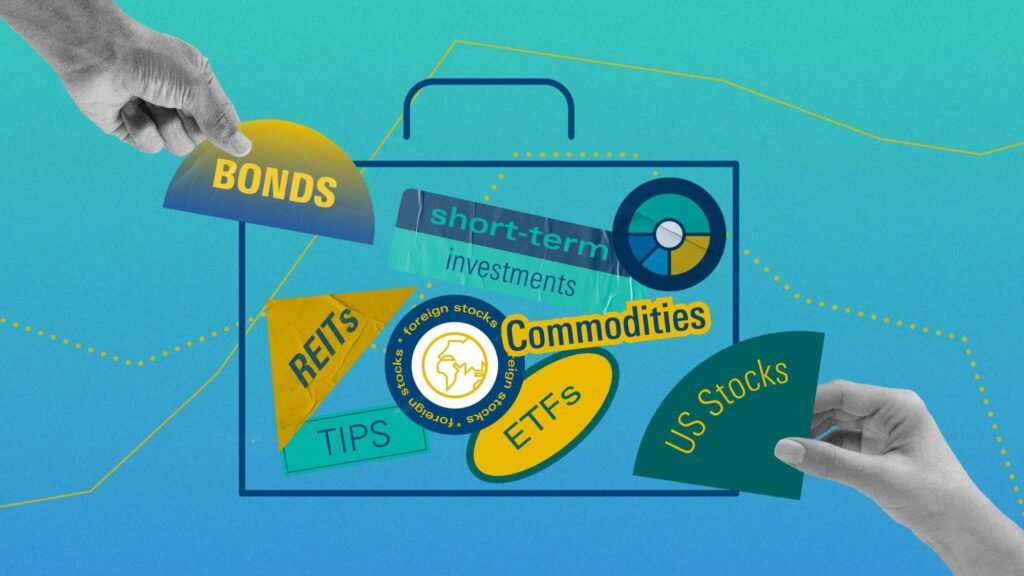
Many recommend broadening beyond stocks and bonds. Consider adding corporate credit, alternative assets, and global equities to improve risk-adjusted returns.
3.2 Embrace Bonds While Yield Opportunities Exist
With a 93% probability of a Fed rate cut later this year, now may be the time to shift cash into intermediate-term bonds or CDs (yielding above 4%) to lock in potential gains.
3.3 Gold, Currencies & Hedge Funds Join the Mix
Wealth managers now advise using gold, hedge funds, and foreign currencies (e.g., yen) as diversifiers—especially as the dollar’s safe-haven reputation erodes under macro volatility.
3.4 Use Broad‑Market ETFs to Diversify Efficiently
ETF options range from “no‑fuss” passive broad-market funds to active/factor-based strategies—allowing investors to tailor diversification to personal preferences.
4. Key U.S. Investment Diversification Stats to Consider
- Record ETF flows: On pace for $1.3 trillion in U.S.-listed ETF inflows in 2025.
- Institutional sentiment: Nearly 50% of institutional investors reducing U.S. exposure.
- Portfolio resilience: Full diversification helped gain 0.61% vs. −4.27% for S&P 500 in Q1 2025.
- Vanguard’s new mix: Suggests 70% bonds / 30% stocks, diverging from traditional 60/40.
- High valuations: S&P 500 trades at historically high multiples (>22× forward earnings).

5. Expert Quotes on U.S. Investment Diversification
“When Stocks Are Priced for Perfection, It’s a Perfect Time to Take Some Profits.” — Barron’s
“Investors should dare to be diversified in 2025 and beyond.” — Johnson Financial
“Cash’s heyday is ending—move into intermediate-again bond opportunities now.” — Barron’s
FAQs
Q1: Why diversify an already high‑performing U.S. portfolio?
High valuations and elevated risks like tariffs and political uncertainty raise the cost of home bias; diversification can reduce portfolio volatility and improve risk-adjusted returns.
Q2: Isn’t U.S. still dominant long‑term?
While the U.S. benefits from tech dominance and macro stability, diversification mitigates risks tied to trade policy, debt levels, and dollar depreciation.
Q3: Which asset allocation mix is recommended now?
Models are shifting: Vanguard favors 70% bonds / 30% stocks for safety; others advise adding international equities, credit, and alternatives to a base 60/40 mix.
Q4: How to diversify efficiently?
Use diversified ETFs—ranging from broad-market passive to active/factor-based products. They offer low cost and instant multi-asset exposure.
Q5: Is now too late for diversification benefits?
No. Q1 2025 data shows full diversification produced gains despite stock downturns. Market unpredictability makes diversification even more valuable now.
6. Other High‑End Website Links for Further Reading
- Morgan Stanley – The Case for Portfolio Diversification
- Fidelity – What Is Portfolio Diversification?
- Financial Times – How to diversify in uncertain 2025
Key Takeaways
| Insight | Explanation |
|---|---|
| Now is a questionable—but timely—moment for diversification | Market valuations are high; structural risks make internal reliance risky. |
| Diversification has proven its value | Q1 2025 showed diversified portfolios outperformed plain equity-heavy ones. |
| Shift in strategy by major institutions | Vanguard and others now advocate bond-heavy or globally diversified mixes. |
| ETF inflows reflect diversification demand | Investors are clearly seeking exposure beyond U.S. equities. |
| Use diversification as a long-term insurance policy | In uncertain times, spreading risk can help preserve capital and volatility tolerance. |
Conclusion
So, is now the right time to diversify your U.S. portfolio Investment style? The answer: possibly yes—but with intent and strategy. Elevated valuations, geopolitical risks, and market concentration argue in favor of expanding your investment palette. Effective diversification—done via bonds, non‑U.S. equities, alternative assets, and diversified ETFs—offers a proven way to enhance resilience. Pair strategy with regular rebalancing and an investment policy statement to stay aligned with your risk tolerance and financial goals.