One of the most powerful forces in investing isn’t flashy. It’s not about day trading, stock tips, or timing the market. It’s about patience—and something called compounding.
In the world of growth stocks, where companies reinvest profits to fuel expansion instead of paying dividends, compounding can turn even modest investments into significant wealth over time.
In this blog, we’ll explore:
- What compounding is and how it works
- Why growth stocks are ideal for compounding
- Real-world examples of compounding in action
- How to build a portfolio that benefits from it
- Common mistakes that disrupt the compounding effect
What Is Compounding?
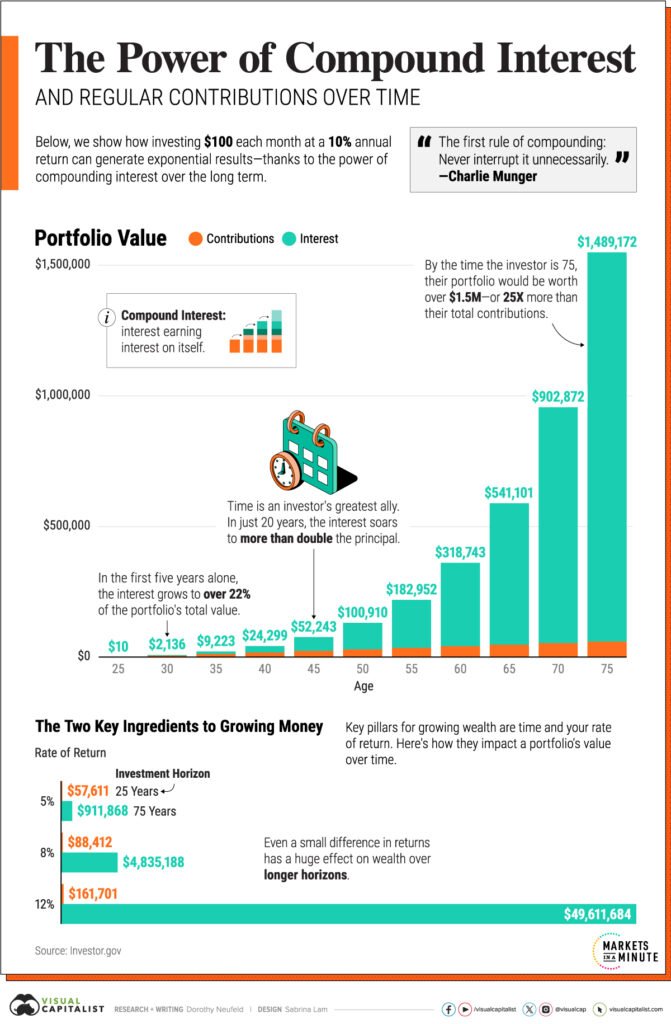
Compounding is the process where the earnings on your investments begin to generate their own earnings. Over time, this “snowball effect” can lead to exponential growth.
It’s not just about earning money—it’s about earning money on the money you’ve already earned.
The Formula:
A = P(1 + r)^t
Where:
- A = Final amount
- P = Principal amount
- r = Annual rate of return
- t = Number of years
Even at modest rates of return, compounding over long periods produces powerful results.
Why Growth Stocks Supercharge Compounding
Growth stocks typically:
- Reinvest profits into innovation, expansion, and market share
- Offer high earnings growth potential
- Attract long-term capital appreciation
By forgoing dividends and putting capital back into the business, these companies can grow revenue—and ultimately share price—rapidly.
Growth stocks are like “compounding machines” when held over years or decades.
Compounding in Action: Real Examples
1. Amazon (AMZN)
- IPO Price (1997): ~$18 (adjusted)
- Price in 2025: ~$3,300+ (adjusted for splits)
- Growth CAGR: ~30% over 25+ years
Investors who held through market crashes and fluctuations saw massive compounding rewards.
2. Apple (AAPL)
- Price in 2000: ~$1 (split-adjusted)
- Price in 2025: ~$200+
- CAGR: ~20% over 25 years
Apple reinvested heavily in R&D, leading to revolutionary products—and exponential stock price growth.
3. Tesla (TSLA)
- IPO Price (2010): $17
- Price in 2025: ~$1,200+ (split-adjusted)
- CAGR: ~45%+ over 15 years
Investors who stayed the course during volatility experienced the explosive potential of compounding in growth.
The 3 Keys to Unlocking Compounding Power
1. Time
Time is the most important factor. The longer you hold, the more your returns multiply.
| Years Invested | Return at 10% CAGR |
|---|---|
| 5 years | 61% gain |
| 10 years | 159% gain |
| 20 years | 573% gain |
| 30 years | 1,644% gain |
Lesson: Start early and hold long.
2. Consistent Returns
While explosive short-term gains are exciting, consistent growth fuels compounding best.
Look for companies with:
- Strong earnings growth
- Proven business models
- Competitive advantages
- Good management and vision
3. Reinvestment
Don’t cash out your gains too early. Reinvest dividends (if any) and profits from stock sales into other high-growth opportunities to maintain momentum.
How to Build a Compounding Growth Portfolio
1. Choose High-Quality Growth Stocks
Look for:
- Revenue and earnings growth >15%
- Strong return on equity (ROE)
- Low to moderate debt
- Expanding addressable markets
2. Hold for the Long Term
Short-term volatility is part of the game. Compounding rewards patience, not panic.
3. Stay Invested During Downturns
Market corrections are buying opportunities for disciplined investors.
Selling during dips interrupts compounding and locks in losses.
4. Diversify Strategically
Don’t bet everything on one stock. Build a diversified growth portfolio across:
- Tech
- Healthcare
- Consumer Discretionary
- Green energy
- Fintech
5. Automate with Dollar-Cost Averaging (DCA)
Investing a fixed amount regularly:
- Reduces the impact of market volatility
- Ensures you buy more when prices are low
- Keeps your compounding machine running
Mistakes That Disrupt Compounding
| Mistake | Why It’s Harmful |
|---|---|
| Frequent trading | Incurs taxes, fees, and interrupts growth |
| Timing the market | Misses out on best growth days |
| Selling too soon | Cuts short exponential potential |
| Over-concentration | Increases portfolio risk |
| Chasing hype | Leads to buying overvalued stocks |
The Cost of Missing Out on Compounding
Let’s compare two investors:
- Investor A starts at 25, invests $5,000/year for 20 years, then stops.
- Investor B starts at 35, invests $5,000/year for 30 years.
Assuming a 10% return:
| Investor | Total Invested | Value at Age 65 |
|---|---|---|
| A | $100,000 | $1.1 million |
| B | $150,000 | $950,000 |
Starting early beats investing more. That’s the power of compounding!
Final Thoughts: Let Time Work for You
The power of compounding is simple—but its effects are profound. With the right growth stocks, a long-term perspective, and a disciplined approach, you can turn small investments into significant wealth.
Don’t underestimate what your money can do when it’s given time to grow. In the world of investing, time isn’t just money—it’s the secret weapon of the wealthy.