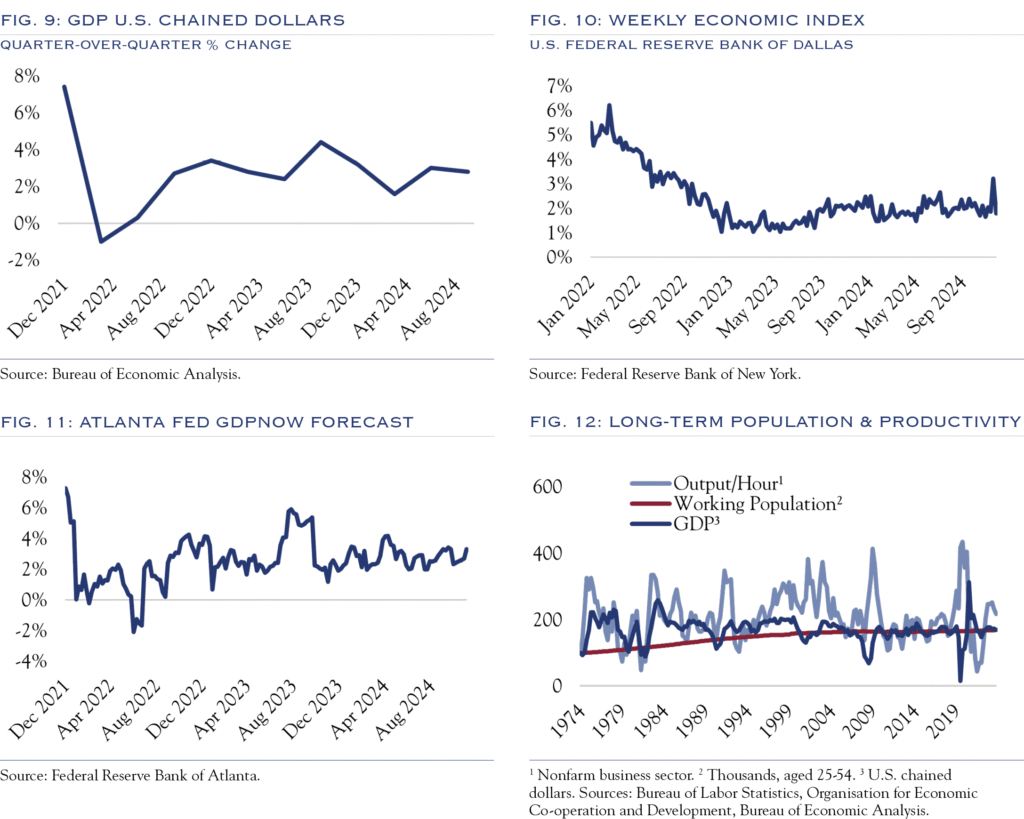
As the U.S. economy navigates through the post-pandemic recovery, rising interest rates, inflationary pressures, and technological disruption, one question continues to intrigue both new and seasoned investors:
How closely are U.S. GDP trends and the stock market really correlated?
While the stock market and Gross Domestic Product (GDP) are both vital indicators of economic health, they don’t always move in tandem. In 2025, understanding the relationship between economic output and stock market performance is more important than ever for building a resilient investment strategy.
What is GDP and Why Does It Matter?
Gross Domestic Product (GDP) is the total monetary value of all goods and services produced in a country during a specific period. It reflects the size and health of the economy.
Key GDP Components:
- Consumer Spending (C)
- Business Investment (I)
- Government Spending (G)
- Net Exports (X – M)
When GDP rises, it often signals economic expansion, job growth, and corporate earnings improvement—all of which can boost investor sentiment.
The Stock Market: A Leading Economic Indicator?
The stock market is often considered a forward-looking indicator, meaning it tends to reflect future expectations rather than present or past economic activity.
- Investors trade based on anticipated earnings, interest rate movements, inflation forecasts, and global conditions.
- This means the market can rise even if GDP data looks weak—and vice versa.
Historical Trends: GDP vs. Stock Market Correlation
Let’s look at some key data from the past two decades:
| Year | U.S. GDP Growth | S&P 500 Performance | Commentary |
|---|---|---|---|
| 2020 | -3.4% (pandemic crash) | +16.3% | Fed stimulus drove stocks higher despite GDP contraction |
| 2021 | +5.7% | +26.9% | GDP and market both surged |
| 2022 | +2.1% | -18.1% | Market dropped on rate hikes, despite positive GDP |
| 2023 | +2.5% | +14.2% | Stable GDP and tech-led market rebound |
| 2024 | +2.8% | +19.6% | AI boom and economic resilience fueled market gains |
| 2025 (est.) | ~2.3% | +12% YTD | Stocks remain strong despite moderating GDP growth |
Key Takeaway:
While there’s some long-term correlation, short-term market movements often diverge from GDP trends due to monetary policy, investor expectations, and sector-specific factors.
Factors Impacting the Correlation in 2025
1. Monetary Policy
- The Federal Reserve’s interest rate decisions heavily influence stock prices.
- In 2025, with rates stabilizing and potential cuts on the horizon, equities are rising even as GDP growth slows.
2. Corporate Earnings vs. Broad Economy
- The stock market is driven by a select group of high-performing companies (especially in tech), whereas GDP reflects the entire economy, including weaker sectors.
Example: The S&P 500 is increasingly dominated by mega-cap tech stocks like Nvidia, Apple, and Microsoft—whose performance often exceeds broader economic trends.
3. Globalization and Multinational Revenue
- Many S&P 500 companies earn 40–50% of their revenue from overseas.
- Their performance isn’t solely tied to U.S. GDP—making the market more global in nature.
4. Investor Sentiment and Speculation
- Stocks often respond more to expectations than reality.
- Positive or negative surprises in earnings or macroeconomic data can create short-term volatility disconnected from GDP figures.
Sectors With High vs. Low GDP Correlation
| Sector | Correlation with GDP | Why? |
|---|---|---|
| Consumer Discretionary | High | Tied to consumer spending and retail sales |
| Industrials | High | Infrastructure and economic activity sensitive |
| Technology | Medium-Low | Driven more by innovation and global demand |
| Utilities | Low | Defensive, stable earnings regardless of GDP |
| Financials | Medium | Interest rates and loan demand influence earnings |
| Healthcare | Low | Less cyclical, consistent demand |
Expert Insights on the GDP-Stock Market Link
Warren Buffett:
“In the short run, the market is a voting machine; in the long run, it is a weighing machine.”
This means short-term sentiment may diverge, but over time, economic fundamentals do matter.
JPMorgan (2025 Report):
“Markets are pricing in long-term innovation and earnings growth. The disconnect from GDP doesn’t imply a bubble, but highlights changing market structure.”
Federal Reserve:
“Stock prices reflect risk appetite and capital market expectations. GDP and markets move in the same direction, but not always at the same time.”
How Should Investors React?
For Long-Term Investors:
- GDP growth supports long-term equity gains, especially in cyclical sectors.
- Diversify across sectors that benefit from economic expansion (industrials, consumer discretionary).
- Focus on companies with strong earnings and low debt, not just macro trends.
For Short-Term Traders:
- Monitor economic indicators (CPI, PMI, jobs reports) to gauge sentiment shifts.
- Be ready for market moves that precede GDP data by weeks or months.
- Consider sectors less tied to GDP for stability (healthcare, utilities, REITs).
Investing Tools and ETFs
Want exposure to the U.S. economy?
Consider these ETFs:
| ETF | Focus | Why It Works |
|---|---|---|
| SPY | S&P 500 | Broad market exposure, reflects GDP trends long-term |
| IWM | Russell 2000 | Small caps, more U.S.-centric and GDP-sensitive |
| XLI | Industrials | High GDP correlation, infrastructure and manufacturing |
| XLY | Consumer Discretionary | Reflects consumer-driven GDP growth |
| VOO | Vanguard S&P 500 | Low-cost, long-term exposure to U.S. market |
Final Thoughts: What the Correlation Really Means in 2025
In 2025, the U.S. GDP is growing steadily—but not at record-breaking speeds. Yet the stock market continues to defy gravity, driven by tech innovation, favorable monetary policy, and investor optimism.
The key takeaway?
While GDP is a strong indicator of overall economic health, stock market performance is shaped by multiple factors—many of which are forward-looking or global in scope.